Owner-led tree care across the East Valley, Scottsdale & Paradise ValleyCall or text Dale: 480-779-4349
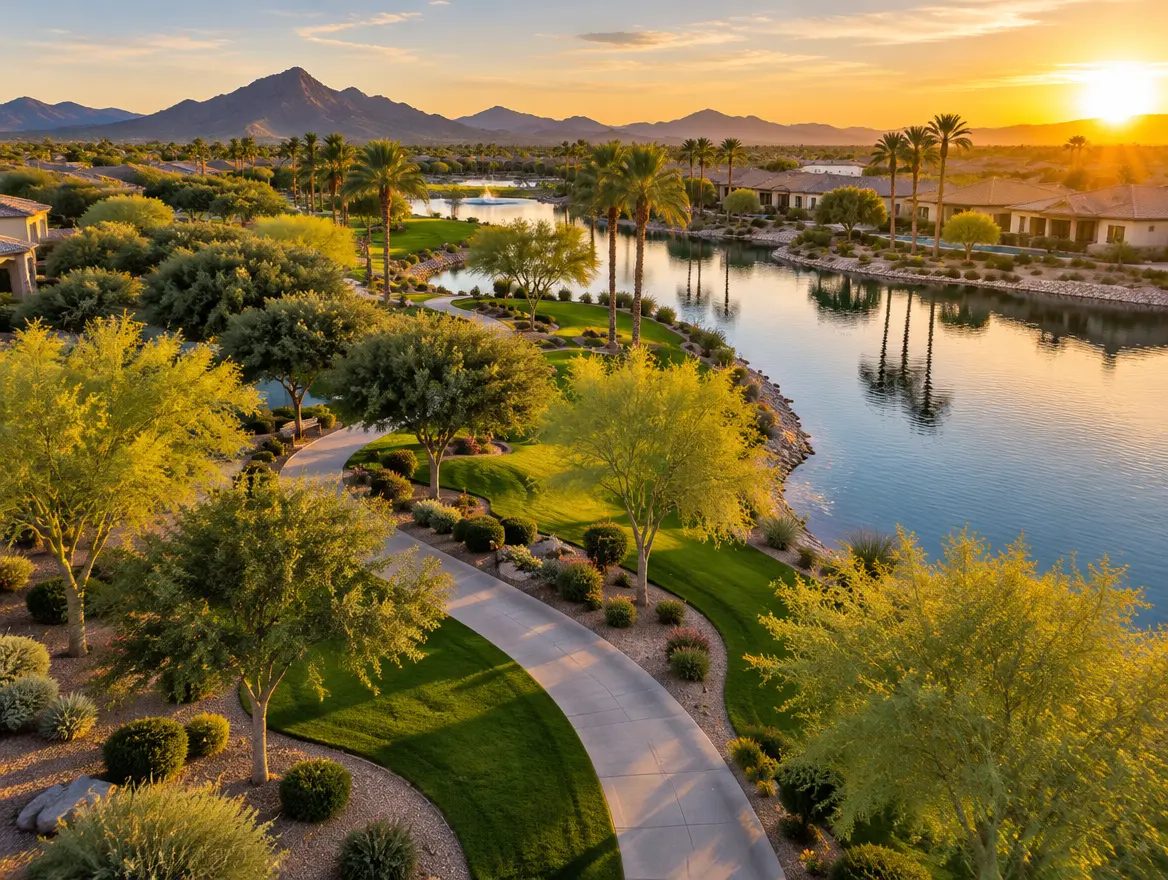
Manicured HOA common area with shade trees, palms and a lake in an East Valley community

HOA & Commercial · East Valley

Tree Care for HOAs & Commercial Properties

HOA and commercial tree care in Gilbert, Queen Creek, San Tan Valley and Mesa. Scheduled pruning, palm trimming and removals with clear written bids.

The short answerAZ Grown Tree Care provides tree trimming, palm trimming, removals and storm cleanup for HOAs, property managers and commercial properties in Gilbert, Mesa, Chandler, Queen Creek, San Tan Valley and Florence. We give boards and managers clear, itemized written bids, work on a schedule that suits the community, and leave common areas clean and resident-ready.

What tree services do HOAs in the East Valley need?

Short answerMost East Valley HOAs need scheduled pruning of common-area trees, sidewalk and street clearance, yearly palm trimming at entries and amenities, removal of dead or hazardous trees, stump grinding, and fast cleanup after monsoon storms. A good tree partner also flags risk trees and helps the board plan and budget for that work year to year.

Master-planned communities across the Southeast Valley tend to have the same tree mix: mesquite and palo verde along streetscapes, ironwood and other desert natives in retention basins, palms at entries and pools, and an increasing number of mature trees in older phases that have outgrown their spaces. Typical HOA scopes include:

  • Rotational pruning. Dividing the community into zones and pruning each on a set cycle so every tree gets attention and the budget stays even.
  • Clearance pruning. Lifting canopies over sidewalks, paths and streets, and keeping sight lines clear at intersections and entries. Town standards apply, so confirm requirements with your municipality.
  • Palm maintenance. Yearly frond and seed-stalk removal at monuments, pools and clubhouses. See palm tree trimming.
  • Removals and replacements. Dead palo verdes, storm-damaged mesquite, and problem sissoo lifting sidewalks.
  • Stump grinding so replacement trees can go in. See stump grinding.
  • Storm response. Clearing common areas after monsoon microbursts. See storm cleanup.

How should an HOA plan its tree trimming schedule?

Short answerStart with a tree inventory: location, species, approximate size and condition. Then group trees into zones and set a pruning rotation, typically every one to three years for desert trees and yearly for palms. Schedule structural pruning for late winter and spring, before monsoon season, and keep some budget in reserve for storm damage.

A simple, workable plan for a community board or manager:

  1. Inventory. List common-area trees by zone (entries, streetscapes, parks, basins, amenity areas). Note species, rough size and any visible problems.
  2. Prioritize risk. Trees over sidewalks, playgrounds, pools, parking and homes come first. Dead trees, major deadwood and leaning trees should be addressed promptly.
  3. Set the rotation. Spreading pruning across zones keeps yearly costs predictable and avoids heavy, damaging cuts that come from long gaps between visits.
  4. Time it right. Late winter through spring is the main window for structural pruning on mesquite and palo verde. Palms are typically done late spring to summer. Avoid heavy pruning in peak summer heat.
  5. Coordinate with landscaping. Your landscape contractor handles shrubs and irrigation. Tree work should line up with their schedule and with irrigation changes.
  6. Communicate with residents. Notices before work in a zone reduce complaints and parking problems.

We can walk the property with your manager or landscape committee and help put this plan together as part of a written bid.

What should an HOA require from a tree service contractor?

Short answerAsk any tree contractor for a certificate of insurance naming the HOA or management company as required, a W-9, and an itemized written scope with pricing per zone or per tree. Ask how they handle resident notices, traffic and parking, and storm callouts. Then check references.

Boards are responsible for spending community money wisely and limiting liability. A checklist for evaluating bids:

  • Insurance certificate (COI) with general liability and workers' compensation, with the association added as additional insured if your management company requires it.
  • Itemized scope. Prices per tree, per palm or per zone make bids easy to compare and easy to adjust if the budget changes.
  • Pruning standards. The bid should commit to accepted practice: no topping, no lion-tailing, no over-trimmed palms.
  • Clean-up and haul-away clearly included.

Our details for your vendor file:

  • Insurance: general liability coverage through Western World Insurance Co. ($1,000,000 per occurrence, $2,000,000 aggregate)

How much does HOA and commercial tree care cost?

Short answerHOA and commercial tree care is bid per property, usually itemized per tree, per palm or per zone. Every property is different, so it really needs to be seen on site for a proper estimate. Larger scopes and rotations are often priced more efficiently per tree.

For community and commercial work, the factors that shape a bid are:

  • Number and mix of trees. Dozens of streetscape mesquite are priced differently from a handful of tall fan palms.
  • Scope. Light maintenance thinning, clearance only, or full structural pruning.
  • Site conditions. Traffic control on busy collector streets, work near pools and playgrounds, and hours restrictions near homes or businesses.
  • Equipment access. Whether lifts and chip trucks can reach the trees, or work has to be done by hand in narrow tracts and basins.
  • Frequency. An ongoing rotation spreads cost evenly and usually costs less over time than letting trees go and catching up.

Bids are written, itemized and free, with no hidden fees, and clean-up is always included. See our tree service cost guide for general price factors, or request a property walk-through.

Do residents need HOA approval to remove their own trees?

Short answerIn many East Valley communities, yes, especially for front-yard trees visible from the street. CC&Rs often require architectural committee approval before removal and may require a replacement tree from an approved list. Rules vary by community, so residents should check their CC&Rs or contact management before scheduling removal.

We work with both sides of this: residents who need approval and boards who set the rules. A few practical points:

  • For residents: Ask for a written quote and scope, including the reason for removal (dead, hazardous, damaging hardscape). Most architectural committees decide faster when the request is clear. Include photos.
  • For boards: Clear guidelines help everyone. Spell out which trees require approval, what replacement is expected, and how hazardous trees can be handled quickly.
  • Hazard exceptions: Many CC&Rs allow faster handling of trees that pose an immediate danger. Check your governing documents for the process.

For individual homeowners, see tree removal and our city pages for Gilbert, Queen Creek and San Tan Valley, where many newer HOA communities are located.

Our hoa & commercial tree care process

  1. Property walk-throughDale walks the community or site with your manager or committee to look at trees by zone and note priorities.
  2. Itemized written bidYou receive a clear bid priced per tree, palm or zone, with insurance details for your vendor file.
  3. Schedule and noticeWe set dates that suit the community, and coordinate resident notices, parking and access.
  4. Work and clean-upCrews prune or remove to the agreed scope and leave common areas, sidewalks and streets clean.
  5. Ongoing planWe help set up a rotation for future years and flag trees to watch before the next monsoon.

HOA & Commercial Tree Care FAQ

Do you work with HOA management companies?
Yes. We can work directly with community managers and boards, provide certificates of insurance and W-9s for vendor setup, and submit itemized written bids that are easy to present at board meetings. Call 480-779-4349 or use the free estimate form to schedule a property walk-through.
Can you provide a certificate of insurance for our HOA?
Yes. Tell us the exact name and address your management company needs listed on the certificate, and we'll have it issued. Our insurance details: general liability coverage through Western World Insurance Co. ($1,000,000 per occurrence, $2,000,000 aggregate). We recommend every HOA keep current certificates on file for every contractor working on common areas.
How often should HOA common-area trees be pruned?
Most desert shade trees in East Valley common areas do well on a one- to three-year pruning rotation, depending on species, irrigation and size. Palms usually need yearly trimming. Young trees benefit from more frequent light structural pruning so they don't develop weak branch structures later.
Can you handle storm damage across a whole community?
Yes. After a monsoon storm, we prioritize hazards first: trees on homes, streets, sidewalks and amenity areas. Then we clear the remaining damage. For emergencies, call 480-779-4349. Emergency availability: 24 to 48 hours. Having a contractor already set up in your vendor system speeds things up.
Do you service commercial properties and retail centers?
Yes. We handle pruning, palm trimming, removals and stump grinding for commercial properties, office parks and retail centers in the East Valley. Work can be scheduled around business hours to keep parking lots and entrances open. Commercial sites with approved landscape plans may have replacement rules, so check with your town.
What trees cause the most problems in HOA common areas?
In East Valley communities, the usual trouble trees are overgrown mesquite that drop limbs in monsoon storms, palo verdes declining from root borers, sissoo whose surface roots lift sidewalks and curbs, and palms that haven't been trimmed in years. A tree inventory helps the board budget for each problem.
Will you give separate prices for each zone or tree?
Yes. Itemized bids make it easier for boards to compare contractors, phase work over multiple budget years, and approve only the most urgent items first. We can price by tree, by palm, by zone or by service type, whichever fits how your community budgets.

Reviews

Neighbors who trusted us

★★★★★
“Dale and his crew are awesome! I know I can always count on them to do an excellent job at a fair price! They always show up on time, clean up and I couldn’t be happier with the workmanship! Highly recommend!”
Amy S., verified customer
★★★★★
“Dale and his team are great. Quick to schedule, efficient to get the work done, great looking result, fair price. I look forward to continuing to use them for any trimming or tree removal needs.”
Seth B., verified customer
★★★★★
“Dale was able to grind and kill stumps that I was having problems taking care of myself. Very friendly!”
Edgar G., verified customer

Free estimate

Need hoa & commercial tree care?

Tell us what you need and Dale will give you an honest, written quote with no pressure and no hidden fees.

480-779-4349

Request your estimate

Takes about 60 seconds. Dale replies within 15 minutes to 24 hours.

What do you need?
Timeline

Prefer to talk? Call or text 480-779-4349

Call DaleFree Estimate