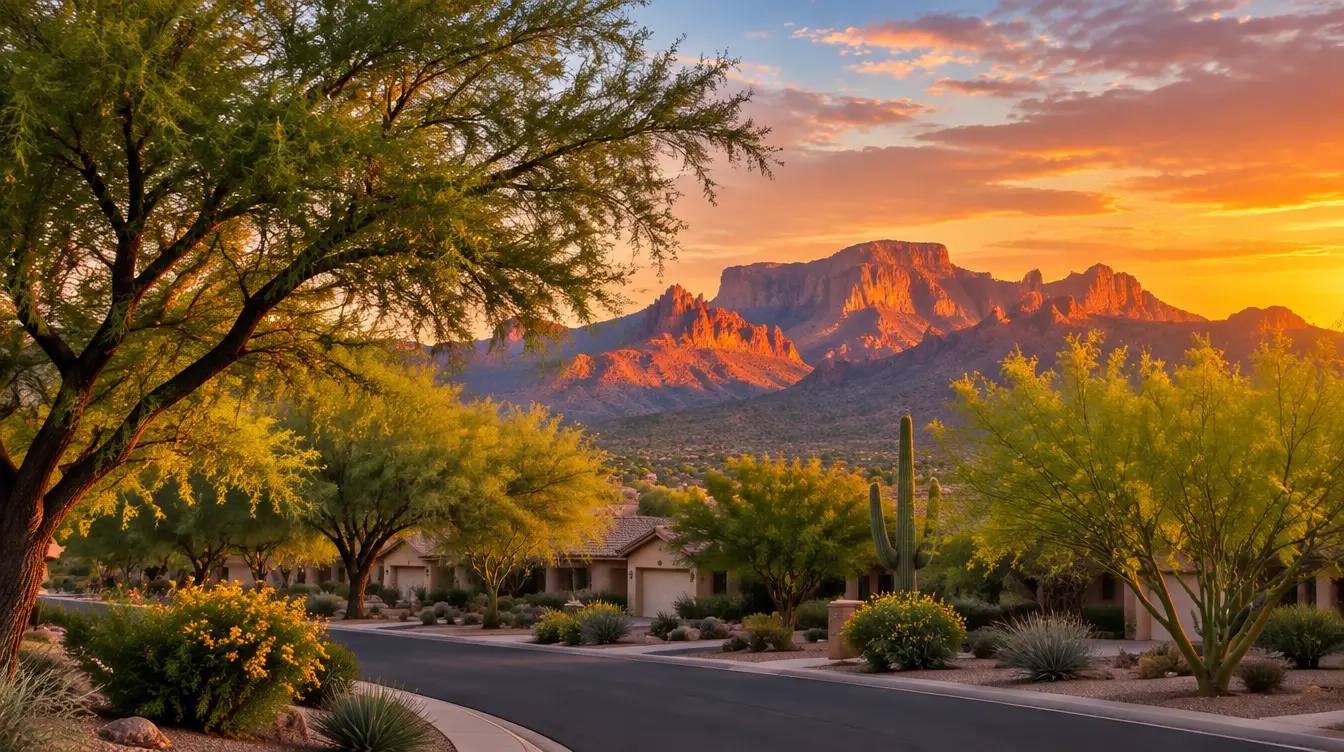
Trees in Mesa: what's different here
Mesa is big and varied, so "tree care in Mesa" means different things on different sides of town. West and central Mesa, including Dobson Ranch and the neighborhoods around downtown, have some of the East Valley's oldest residential canopy: tall eucalyptus, Aleppo pine, ash and towering fan palms that now overhang roofs and power lines.
Northeast Mesa still carries its citrus-growing past. The City of Mesa treats part of that area as a citrus sub-area, and some new subdivisions there are expected to keep or plant citrus. Farther east, Las Sendas and Red Mountain Ranch sit against the Usery and Red Mountain foothills, where native palo verde, ironwood and mesquite mix with landscaped yards. In the southeast, Eastmark's young trees are still being shaped.
Trees we care for most in Mesa
- Mesquite
- Palo verde
- Ironwood
- Citrus
- Eucalyptus
- Aleppo pine
- Sissoo
- Mexican fan palm
- Date palm
Neighborhoods we serve
- Dobson Ranch
- Las Sendas
- Red Mountain Ranch
- Eastmark
- Downtown Mesa
- Northeast Mesa citrus area
Recent work in Mesa
Before and after photos from Dale's own recent jobs in Mesa. See every job photo.
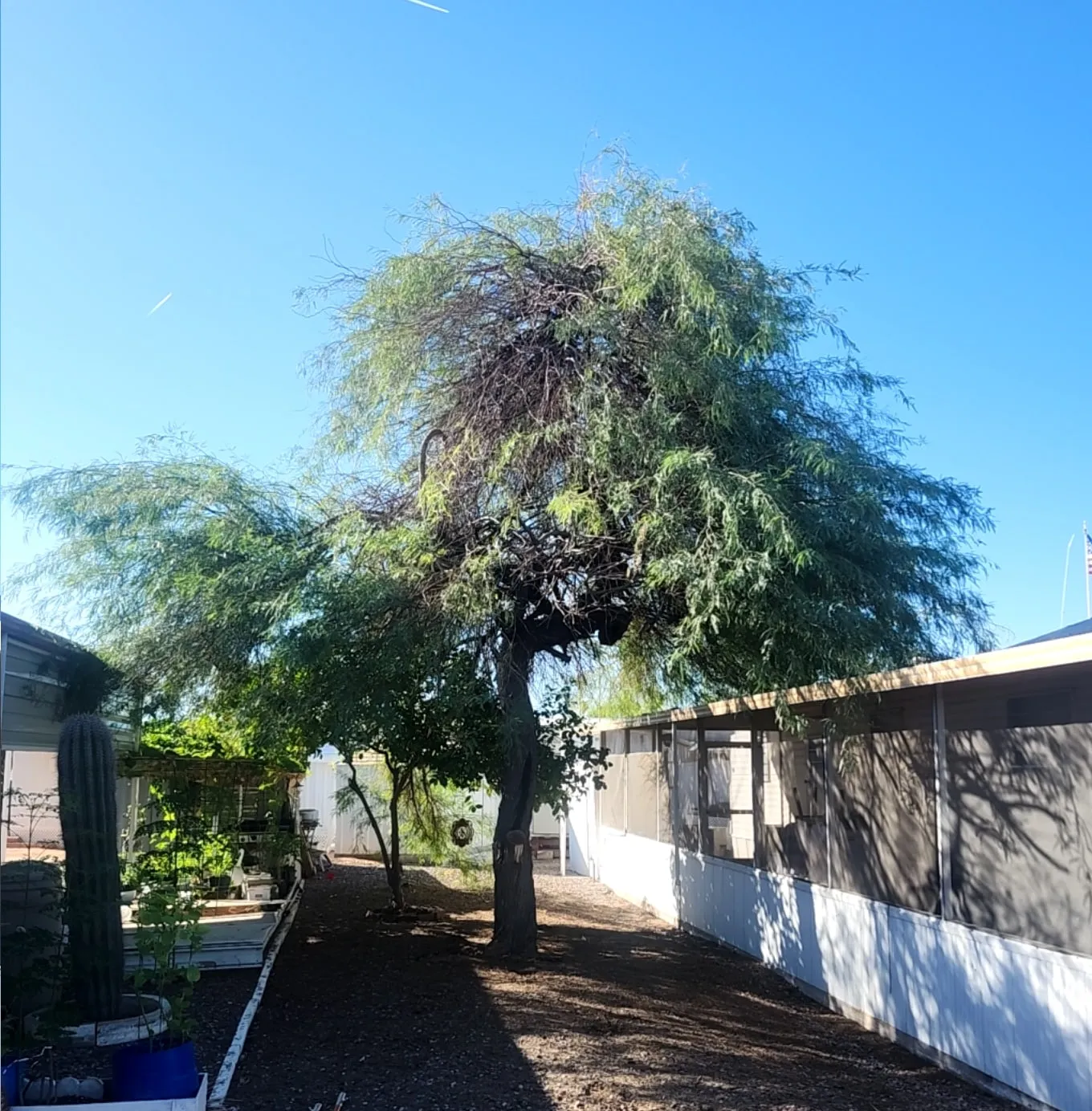 Before
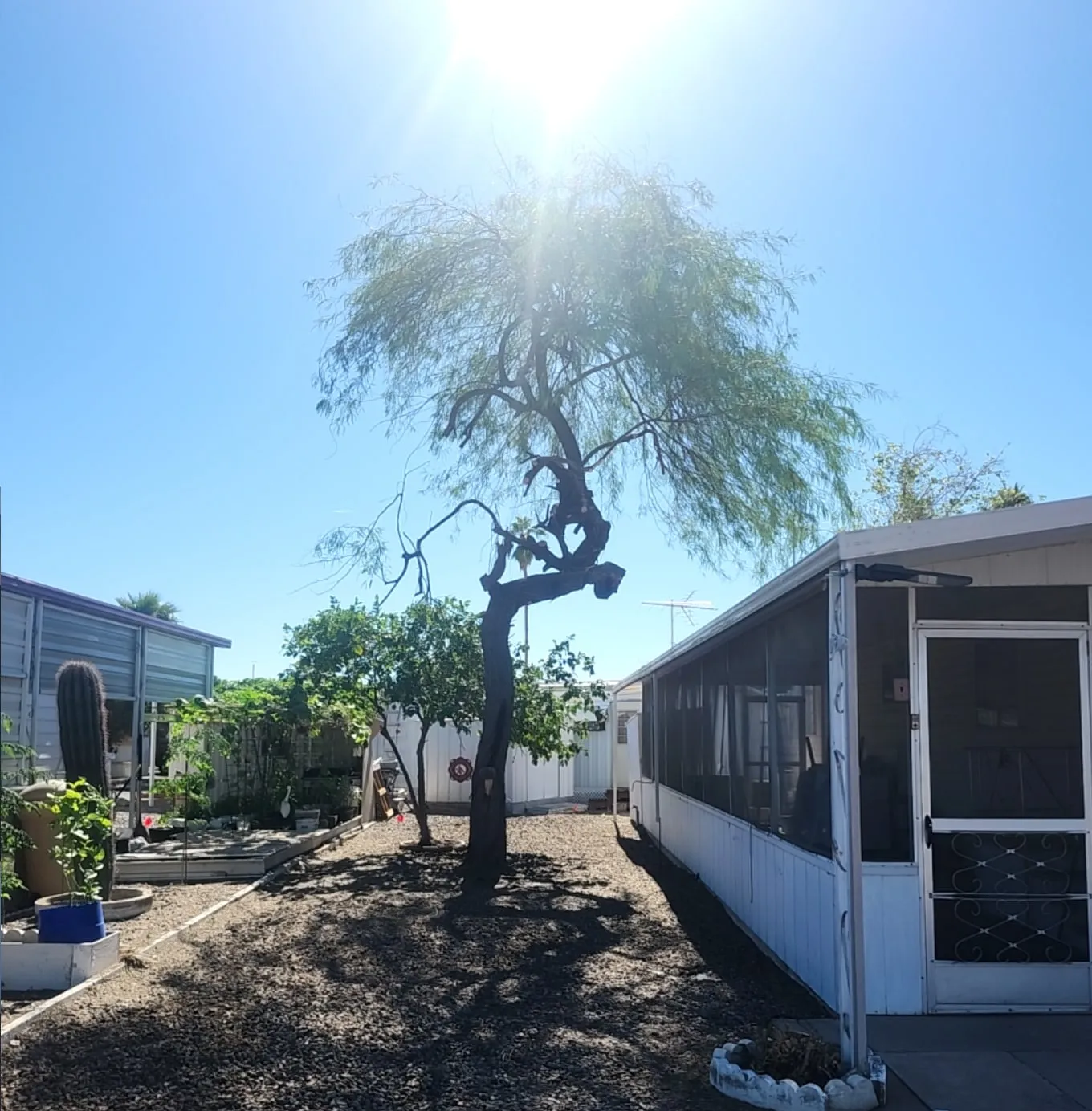 After
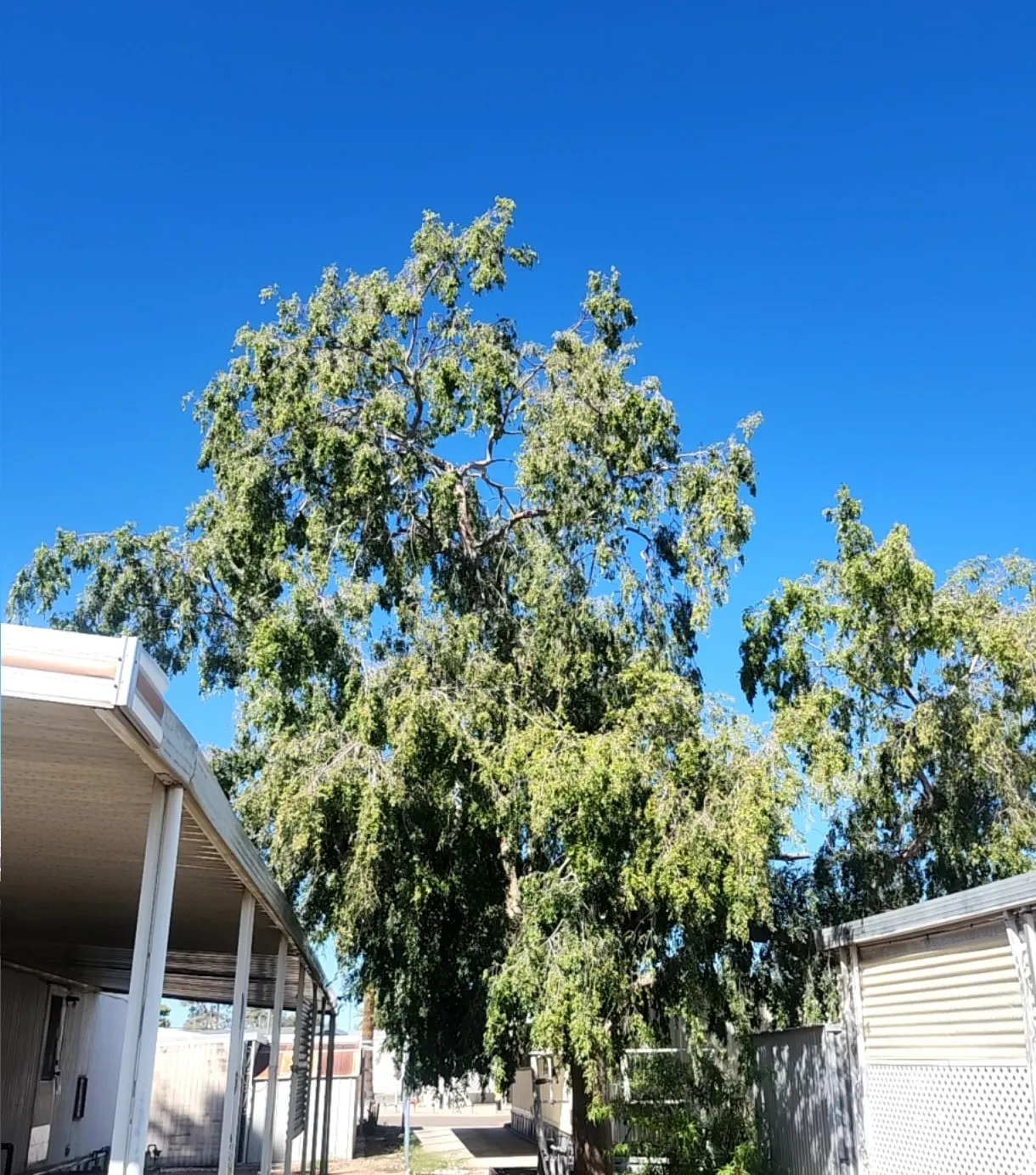 Before
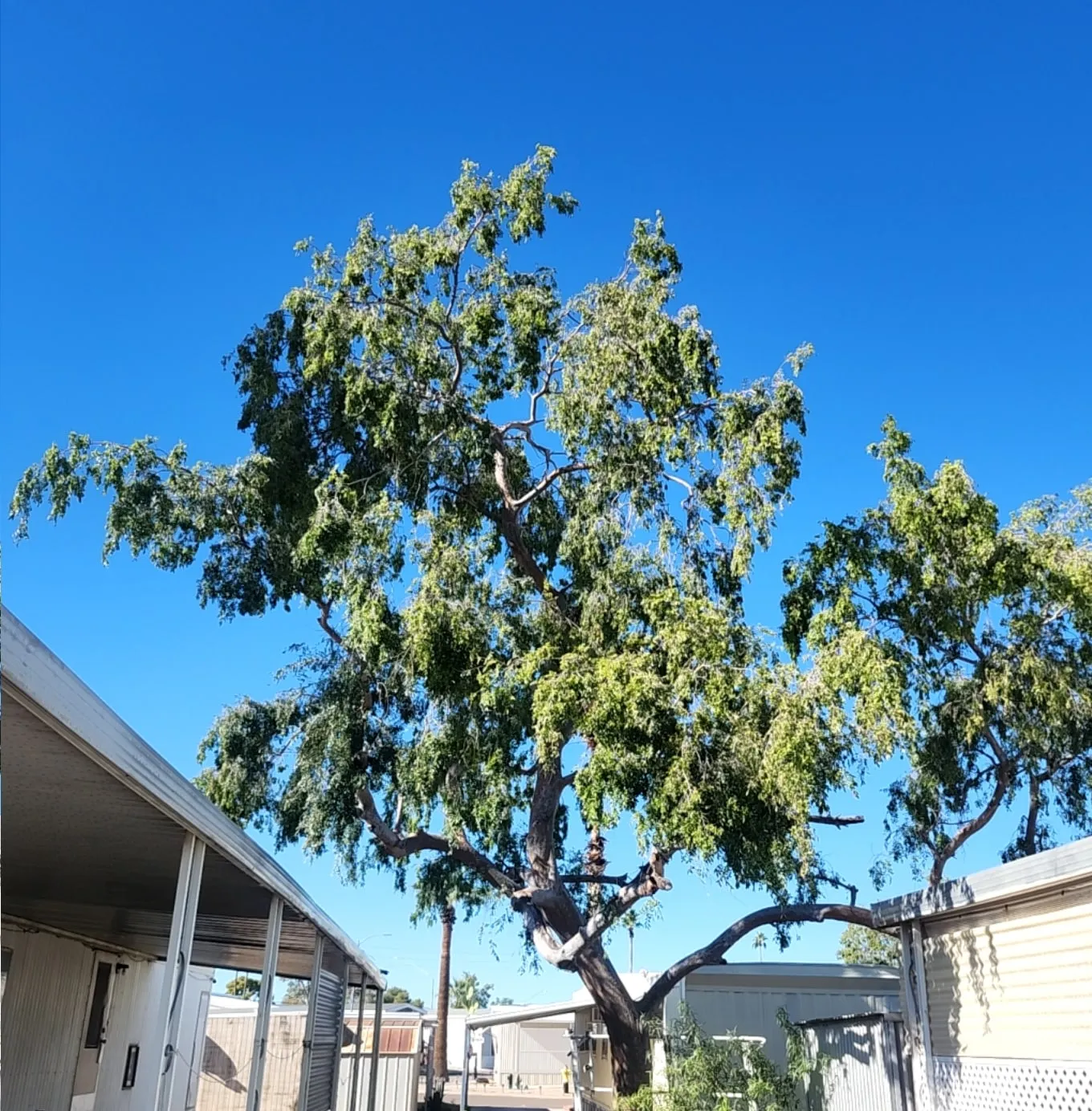 After
What tree services does AZ Grown offer in Mesa?
Mesa jobs range widely in scale. A single visit might involve thinning a backyard mesquite in Dobson Ranch, or lowering heavy eucalyptus limbs over a roof in an older central Mesa neighborhood.
- Tree trimming and pruning: thinning, crown reduction, roof and wall clearance, and young-tree structural pruning in newer areas like Eastmark.
- Tree removal: dead, storm-damaged or oversized trees, taken down in sections where space is tight.
- Palm tree trimming: Mexican fan palms and date palms, including tall palms in established neighborhoods.
- Stump grinding: below-grade grinding so you can replant or re-landscape.
- Storm and monsoon cleanup: fallen limbs and uprooted trees after summer storms.
- HOA and commercial tree care: common areas, entries and greenbelts.
Every quote is in writing, so you know the scope and price before work begins. Request a free estimate or call 480-779-4349.
How do you handle large, mature trees in older Mesa neighborhoods?
Neighborhoods built in Mesa's earlier growth decades have trees that were planted for fast shade and are now very large. We regularly see:
- Eucalyptus with heavy end-weighted limbs and shedding bark over roofs and driveways.
- Aleppo pine with dense canopies, needle buildup on roofs and limbs over block walls.
- Sissoo and ash whose roots lift sidewalks, pavers and pool decks.
- Tall fan palms that have not been serviced in years.
Reduce first, remove when needed
Following University of Arizona Cooperative Extension guidance, we avoid topping. Instead, we shorten long limbs back to healthy lateral branches, remove deadwood and open the canopy so monsoon winds pass through. If a tree is dead, structurally unsound or causing ongoing damage, removal may be the better choice, and we explain why in the quote.
Power lines
Never trim near energized lines yourself. If branches touch service drops or overhead lines, contact your electric utility first; they handle line clearance on their equipment. We can work on the rest of the tree once it is safe.
More on tree removal and trimming.
How should citrus trees in Mesa be pruned?
Mesa's citrus heritage is still visible, especially in northeast Mesa where older groves and grove-lot homes remain. The City of Mesa has worked to preserve part of that history, and some newer subdivisions in the citrus area plant citrus on each lot.
Citrus pruning do's
- Remove dead, broken and crossing branches.
- Cut off suckers growing from below the graft union; they are usually sour rootstock.
- Lift the skirt slightly if it blocks irrigation or harbors pests, but keep foliage low.
- Thin interior growth lightly for airflow.
Citrus pruning don'ts
- Do not strip the canopy like a shade tree; exposed bark sunburns quickly.
- Avoid heavy cuts in summer heat or right before a frost.
- Do not top citrus to control height without a plan; it triggers vigorous water sprouts.
The University of Arizona Cooperative Extension publishes good citrus care guides for Maricopa County homeowners. For large, overgrown grove trees or removals, see our tree trimming page or request an estimate.
What should Las Sendas and Red Mountain Ranch homeowners know about desert trees?
Las Sendas and Red Mountain Ranch sit on Mesa's eastern edge, close to the mountain preserves and regional parks. Many lots back onto natural desert or HOA-maintained open space.
Native trees need a lighter touch
- Foothill and blue palo verde: remove dead and crossing branches, and avoid large cuts on the green bark.
- Ironwood: slow-growing and long-lived; prune sparingly and only with a clear purpose.
- Native mesquite: on unirrigated desert, these need far less thinning than irrigated yard mesquite.
Rules to check
Arizona's Native Plant Law can apply when certain protected native plants are removed, transplanted or salvaged. The Arizona Department of Agriculture administers it, and requirements vary by plant and situation, so check with them before removing native trees or cacti. Foothill HOAs also tend to have strict guidelines for natural areas and view corridors, so confirm with your association first.
Slope and access
Hillside lots and boulder-lined yards can make equipment access tricky. We plan around that and note any special handling on the written quote. See HOA tree care for common-area work.
Do young trees in Eastmark need pruning?
Eastmark, in southeast Mesa near Phoenix-Mesa Gateway Airport, is one of the city's newer master-planned communities, and its trees are still young. That is good news: young trees are the cheapest and easiest to shape.
What structural pruning addresses
- Co-dominant leaders: two trunks of equal size competing, which tend to split later.
- Tight branch angles: weak attachments with included bark.
- Low limbs: branches that will block walkways or hit walls as they grow.
- Stakes and ties: builder stakes left too long can rub or girdle the trunk.
Irrigation matters
Fast growth from frequent, shallow drip watering can create top-heavy trees with shallow roots. Deeper, less frequent watering that reaches the edge of the canopy, as recommended by the University of Arizona Cooperative Extension, builds stability.
Light pruning now beats a removal later. See tree trimming for details, or book a free estimate.
How much does tree service cost in Mesa?
Mesa jobs vary more than most because the city's trees range from young Eastmark plantings to decades-old eucalyptus. The biggest price factors:
- Tree size: mature eucalyptus and pine take far more time than a young palo verde.
- Access: alley access in older neighborhoods can help; walled backyards and hillside lots take more labor.
- Hazards: nearby roofs, pools and overhead lines require careful rigging.
- Debris volume: large canopies mean more hauling, which is always included in our quotes.
The quickest route to a firm price is a free on-site estimate.
Your price is set after Dale sees the tree, and it comes in writing with no hidden fees. See our tree service cost guide for more detail, or request a free estimate.
Our services in Mesa
- Tree Trimming & Pruning in Mesa: Structural pruning, crown thinning and clearance cuts for mesquite, palo verde, ironwood and more.
- Tree Removal in Mesa: Safe, controlled removal of dead, leaning or problem trees, even in tight backyards beside walls and pools.
- Palm Tree Trimming in Mesa: Frond trimming, seed-pod removal and clean-up of loose leaf bases for date palms, Mexican fan palms and more.
- Stump Grinding in Mesa: Grind stumps below grade so you can replant, lay gravel or pour hardscape. Grindings cleaned up.
- Monsoon & Storm Tree Cleanup in Mesa: Fallen trees, split limbs and storm debris cleared safely after monsoon microbursts and dust storms.
- HOA & Commercial Tree Care in Mesa: Scheduled pruning, palm trimming and removals for HOA common areas, streetscapes and commercial sites.
- Sissoo Tree Removal in Mesa: Removal of sissoo trees whose surface roots are lifting pavers, cracking pool decks and invading pipes.