Owner-led tree care across the East Valley, Scottsdale & Paradise ValleyCall or text Dale: 480-779-4349
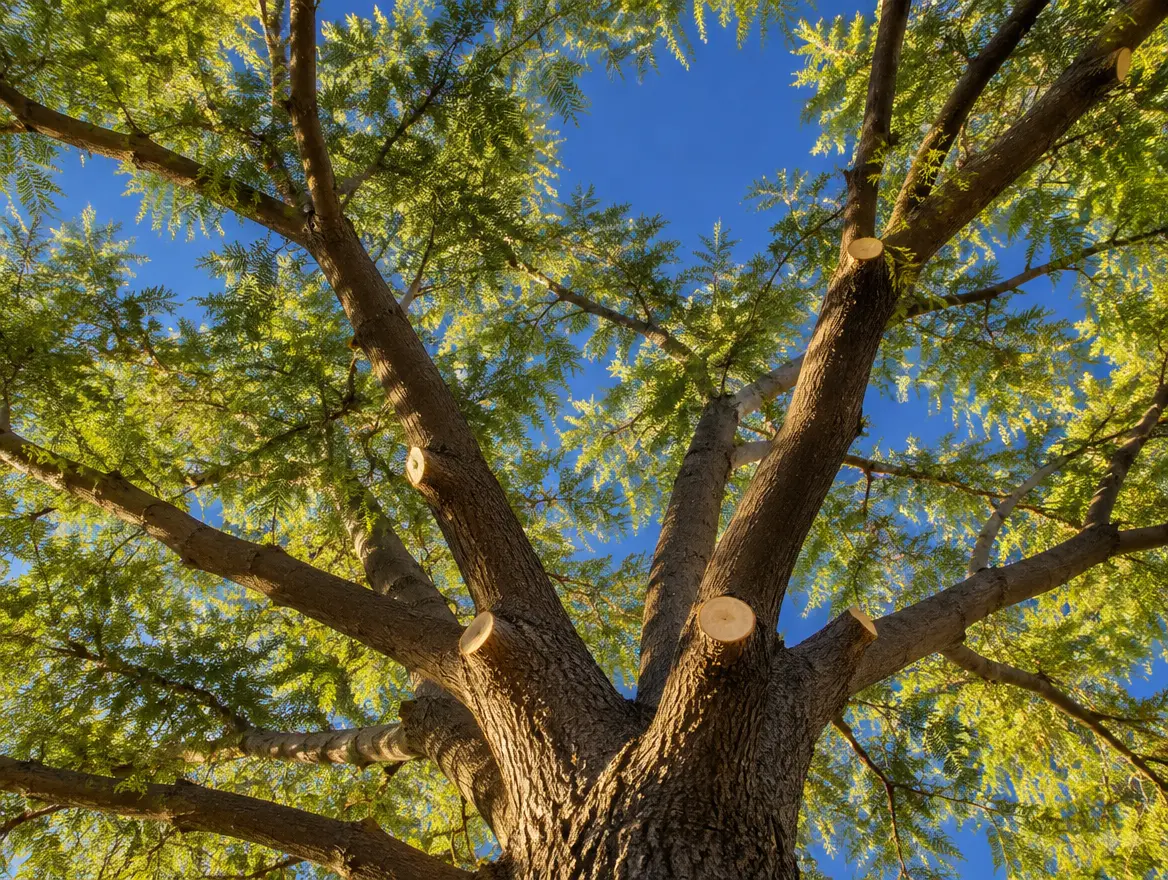
Canopy of an expertly pruned mesquite tree against a blue Arizona sky

Tree Trimming & Pruning · East Valley

Tree Trimming & Pruning in Gilbert and the East Valley

Tree trimming in Gilbert, Mesa, Chandler and Queen Creek. Desert-smart pruning for mesquite and palo verde, upfront written quotes and full clean-up.

The short answerAZ Grown Tree Care trims and prunes trees for homeowners and HOAs in Gilbert, Mesa, Chandler, Queen Creek, San Tan Valley and Florence. Dale's crew thins and shapes mesquite, palo verde and ironwood so they hold up to monsoon winds, clear roofs and walls, and stay healthy. Each job starts with an upfront written quote and ends with full clean-up.

What does tree trimming include in Gilbert?

Short answerA proper trim removes dead, broken and crossing branches, thins the crown so wind can pass through, and lifts limbs off roofs, walls, sidewalks and driveways. In the East Valley that usually means structural pruning on fast-growing desert trees, plus hauling away every branch and raking the gravel or turf clean afterward.

"Trimming" covers several different cuts, and a good quote should say which ones your trees need. On a typical Gilbert or Chandler lot, a visit may include:

  • Crown thinning: selectively removing interior branches so monsoon gusts move through the canopy instead of catching it like a sail. This matters most on dense mesquite and sissoo.
  • Deadwooding: taking out dead and dying limbs, which are the first to drop in a storm.
  • Structural pruning: choosing one strong leader and removing competing stems with tight, weak unions. Young trees benefit most; a few cuts now prevent a split trunk later.
  • Clearance pruning: lifting limbs off roofs, block walls, pool areas and the sidewalk, and away from the house so roof rats and ants have no easy bridge.
  • Reduction cuts: shortening long, heavy limbs back to a healthy lateral branch instead of stubbing them off.

What we avoid matters just as much. "Lion-tailing" (stripping all the inner growth and leaving foliage only at the tips) and topping both leave a tree weaker and more likely to fail. The ISA's consumer site, TreesAreGood.org, explains why those practices cause problems. Clean-up and haul-away are always included. If a tree is past saving, we will say so and walk you through tree removal options instead.

When is the best time to trim trees in Arizona?

Short answerFor most East Valley desert trees, late winter through spring is the best window for structural work, and a lighter thinning before monsoon season helps reduce wind damage. Avoid heavy pruning in the June-to-August heat, when freshly exposed bark can sunburn and stressed trees struggle to recover. Remove storm-damaged or dead wood any time.

Timing depends on the species and on what the cut is meant to do. General guidance for common Valley trees:

TreeBest windowNotes
MesquiteLate winter to springThin before monsoon. Mesquite grows fast with irrigation and gets top-heavy.
Palo verdeSpring, after the worst coldKeep cuts small. Large wounds invite decay, and stressed trees attract root borers.
IronwoodLate winter to springSlow-growing and dense. It usually needs only light, careful pruning.
SissooLate winter to springFrost-tender. Wait until freeze risk has passed to judge cold damage.
EucalyptusCooler monthsProne to dropping heavy limbs. Check for weak, end-weighted branches.

The rule of thumb across all of them: don't remove more than about a quarter of the live canopy in one season, and avoid big cuts in the hottest weeks of summer. Shade from the canopy protects the bark, and desert trees in our climate can sunscald quickly. University of Arizona Cooperative Extension publishes pruning guides for desert landscape trees if you want to read further. For palms, the timing is different. See palm tree trimming.

How often should desert trees be trimmed?

Short answerMost mature mesquite, palo verde and other irrigated desert trees in the East Valley do well with professional pruning every one to three years. Fast growers on drip or flood irrigation need it more often. Young trees benefit from light structural pruning every year or two. Slow-growing ironwood may need attention only every few years.

How often a tree needs trimming depends mostly on how much water it gets. A mesquite on generous drip or flood irrigation can add several feet of growth a year. That growth is often long, thin and end-heavy, the kind that splits in a monsoon microburst. The same species on low water grows slower and stays more compact.

Signs your tree is due:

  • The canopy is so dense you can't see sky through it.
  • Branches touch the roof, the block wall or the house, or hang over the pool.
  • Limbs droop over sidewalks or the street, which many HOAs and towns require you to keep clear.
  • You see dead limbs, cracks, or bark peeling at branch unions.
  • The tree is visibly leaning, or heavier on one side after past storms.

Many East Valley homeowners schedule trimming in late winter or spring so their trees are thinned before the monsoon arrives. HOA common areas often run on a fixed rotation. See our HOA and commercial tree care page for how that works.

How much does tree trimming cost in the East Valley?

Short answerTree trimming with AZ Grown is quoted after an on-site look, with a $250 minimum. Every tree is different, so your exact price depends on the tree's size, species, access and how much work it needs. You get a free, upfront written quote before any work starts.

We don't price by guesswork, and we don't add fees after the fact. The quote you sign is the price you pay, with clean-up and haul-away included. The main things that move a trimming price:

  • Height and canopy spread. A 15-foot palo verde is a very different job from a 35-foot eucalyptus.
  • Access. Front yards with open driveways are faster. Backyards behind a narrow side gate, over a pool, or against a block wall take more rigging and hand-carrying.
  • How overdue the tree is. A tree trimmed two years ago needs a maintenance thin. A tree left alone for eight years needs much more work.
  • Hazards. Limbs near service drops, roofs or neighbors' property need ropes and controlled lowering.
  • Number of trees. Doing several trees in one visit usually lowers the cost per tree.

For more on what drives the price of each service, see our East Valley tree service cost guide, or request a free estimate.

Is it safe to trim a tree near power lines myself?

Short answerNo. Never trim a tree that is touching or near overhead power lines yourself. Electricity can arc through branches and tools. In the East Valley, contact your electric utility (SRP or APS, depending on your address) about lines on the pole side. For the service line to your house, call a qualified professional.

Most tree-related injuries we hear about come from homeowners on ladders with a chainsaw, or from cutting a limb that swings into a person or a line. A few general safety points:

  • Utility lines. Lines running pole-to-pole are typically handled by the utility or its contracted line-clearance crews. The rules for the service drop (the line from the pole to your house) vary, so check with SRP or APS before anyone touches a tree near it.
  • Ladder work. A limb under tension can kick back hard when it's cut. If you need a chainsaw above shoulder height, it's time to call a crew.
  • Heat. Summer afternoons in Gilbert and Queen Creek are dangerous for anyone working in a tree. Good crews start early and schedule heavy work for cooler months.

Small, low branches you can reach from the ground with hand pruners? Go for it. Cut just outside the branch collar, the slightly swollen ring where the branch meets the trunk, and don't paint the wound. For anything bigger, get a free quote.

Why choose AZ Grown Tree Care for tree trimming?

Short answerAZ Grown Tree Care is owner-led. Dale knows desert species and how they behave during monsoon season. You get an upfront written quote, no hidden fees, and a yard cleaned up and hauled away when the crew leaves. Insurance: general liability coverage through Western World Insurance Co. ($1,000,000 per occurrence, $2,000,000 aggregate).

We focus on the Southeast Valley: Gilbert, Mesa, Chandler, Queen Creek, San Tan Valley and Florence. That means we know the trees people actually plant here, the HOA rules that come with newer communities, and how caliche and irrigation habits shape how a tree grows.

What you can expect:

  • A walk-around with you before we quote, so you know exactly which cuts are planned and why.
  • A written quote with the price stated up front. No surprise add-ons.
  • Pruning that follows accepted arboricultural practice: no topping, no lion-tailing.
  • Full clean-up. Branches hauled away, and gravel and turf raked clean.

From a recent customer, Seth B.: "Quick to schedule, efficient, great-looking result, fair price." Read more on our reviews page.

Recent trimming jobs

Dale's own before and after photos from recent jobs in San Tan Valley and Mesa. See every job photo.
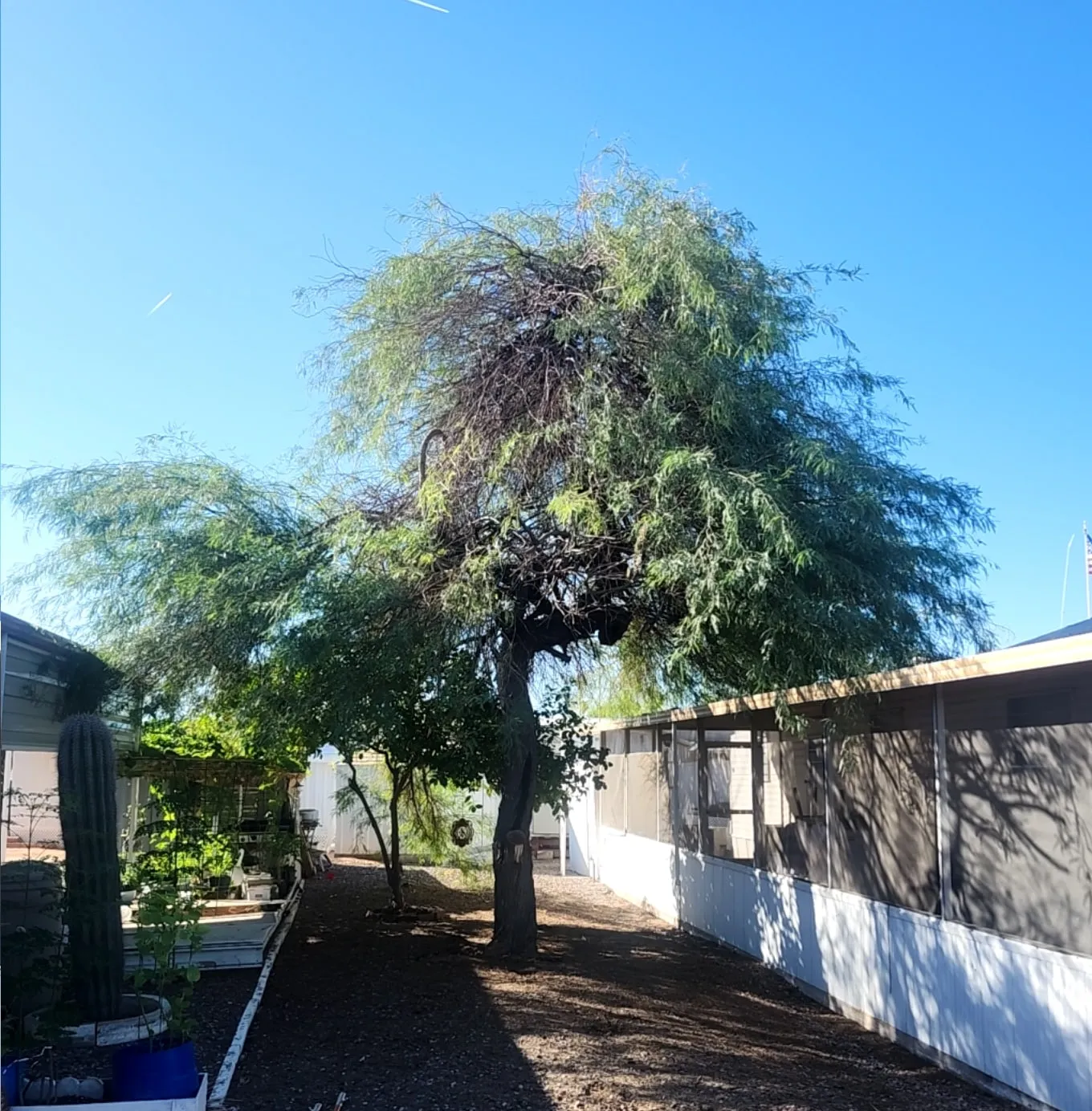
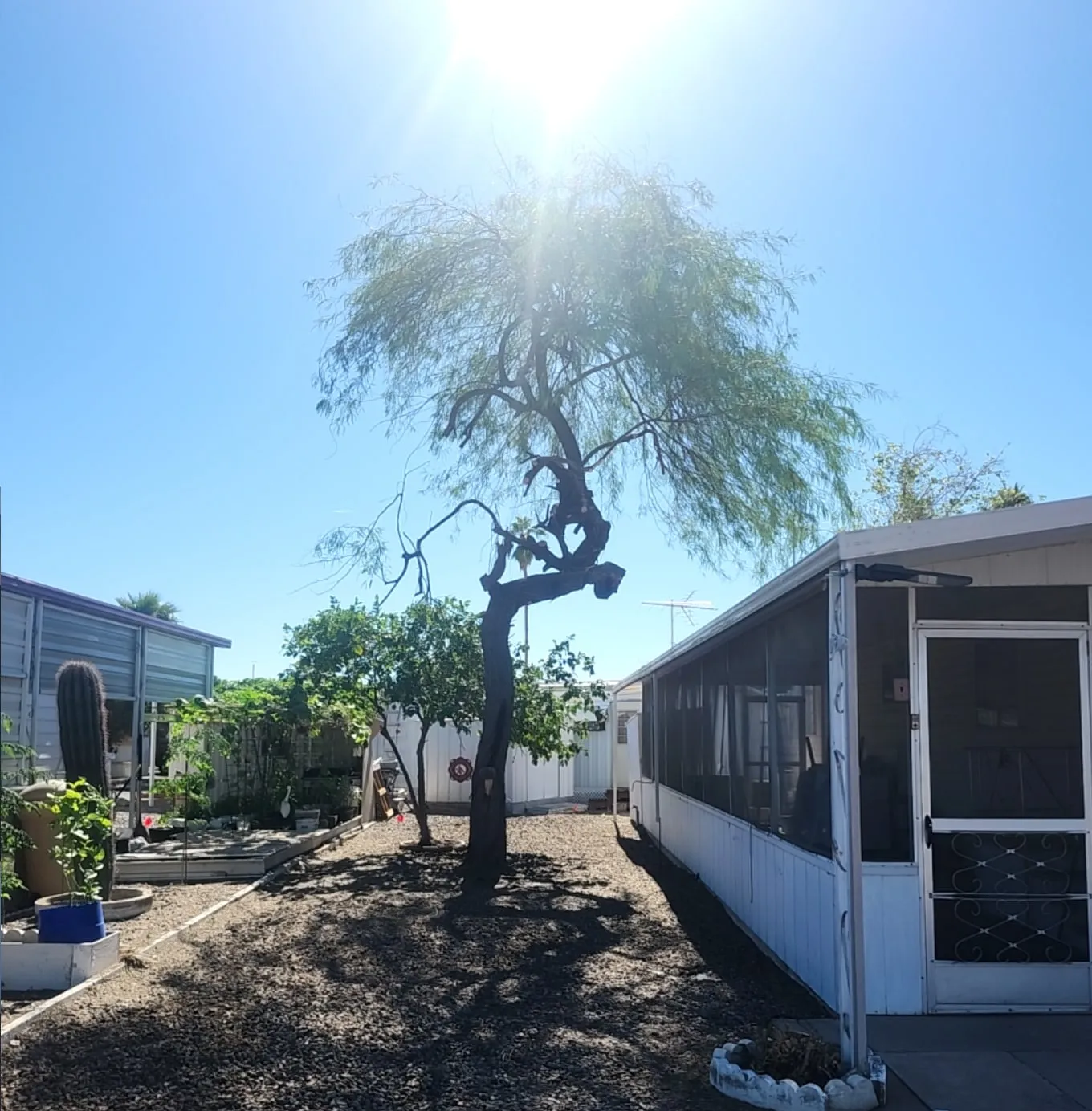
Overgrown shade tree in Mesa with a dark tangle of branches in the top of its crown, before trimmingBefore
The same Mesa tree after trimming: the dark tangle is gone and the twisting trunk and limbs show through a thinned canopyAfter
Overgrown tree beside a screened porchMesa · October 2026The dark tangle in the top of the crown is gone, and the canopy is thinned.
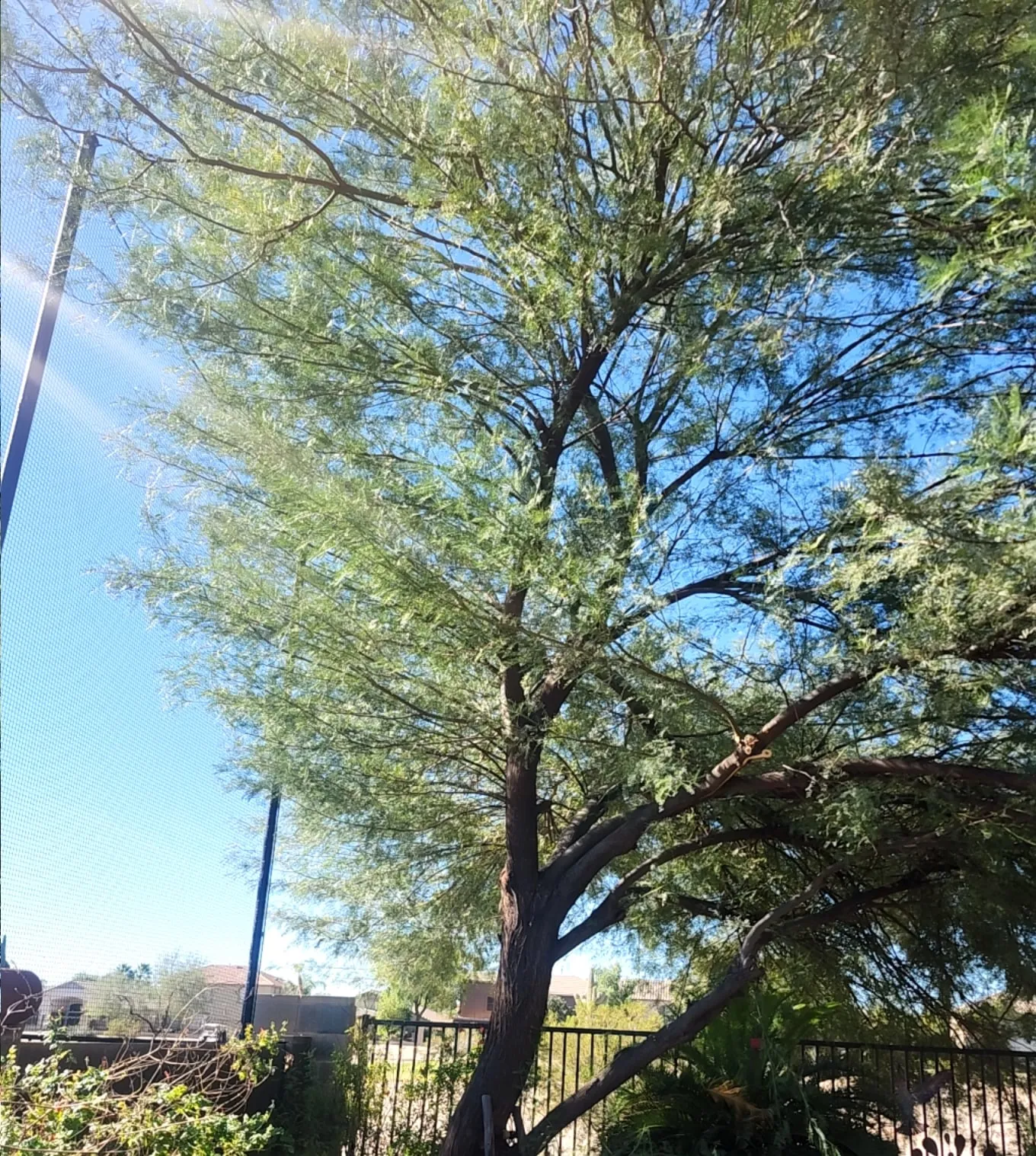
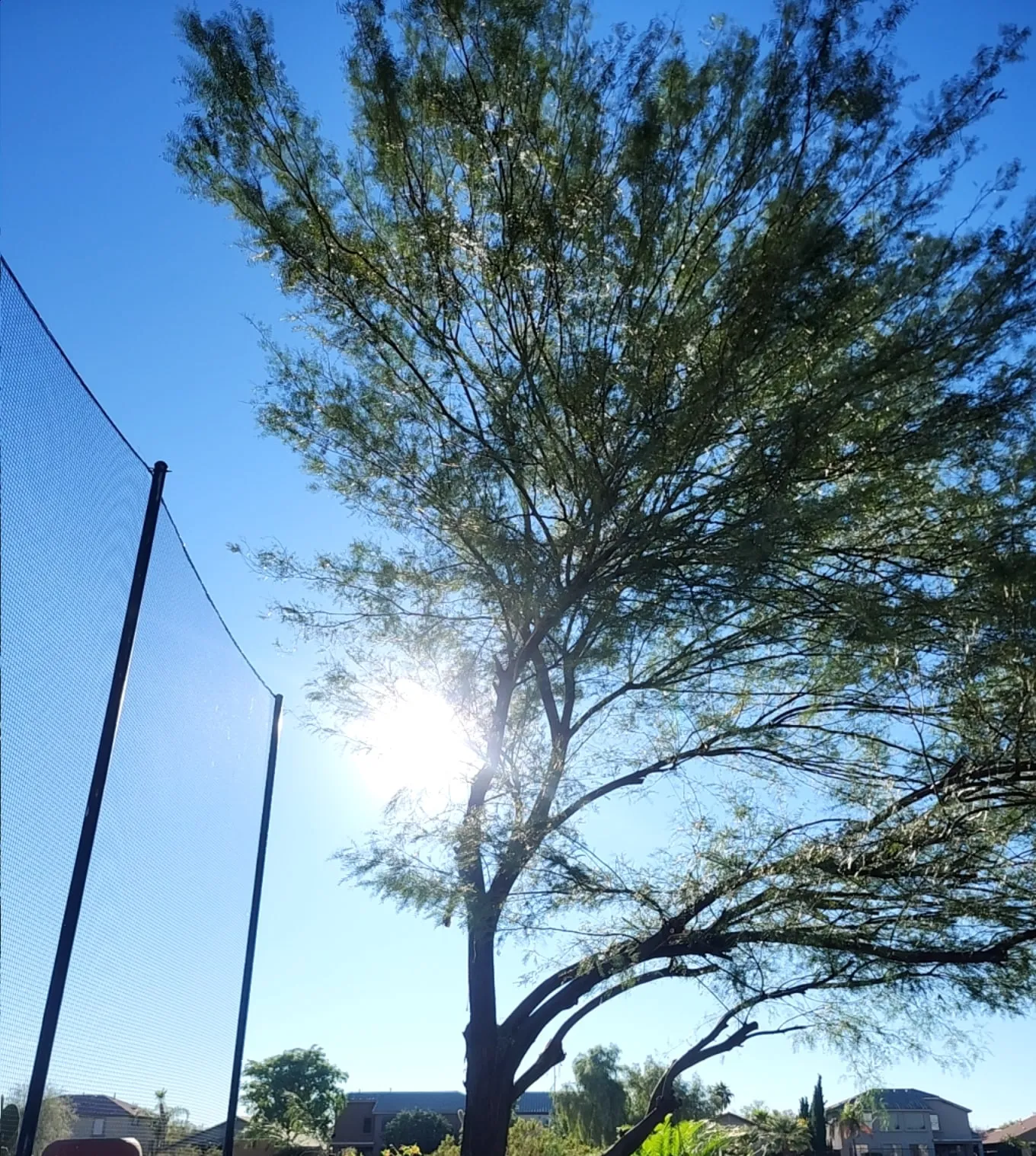
Tall, full shade tree beside a wrought-iron fence in a San Tan Valley backyard, before trimmingBefore
The same San Tan Valley tree after trimming, with a thinner, more open canopy and sun showing throughAfter
Backyard shade treeSan Tan Valley · November 2026Thinned so the sun shows through the canopy.
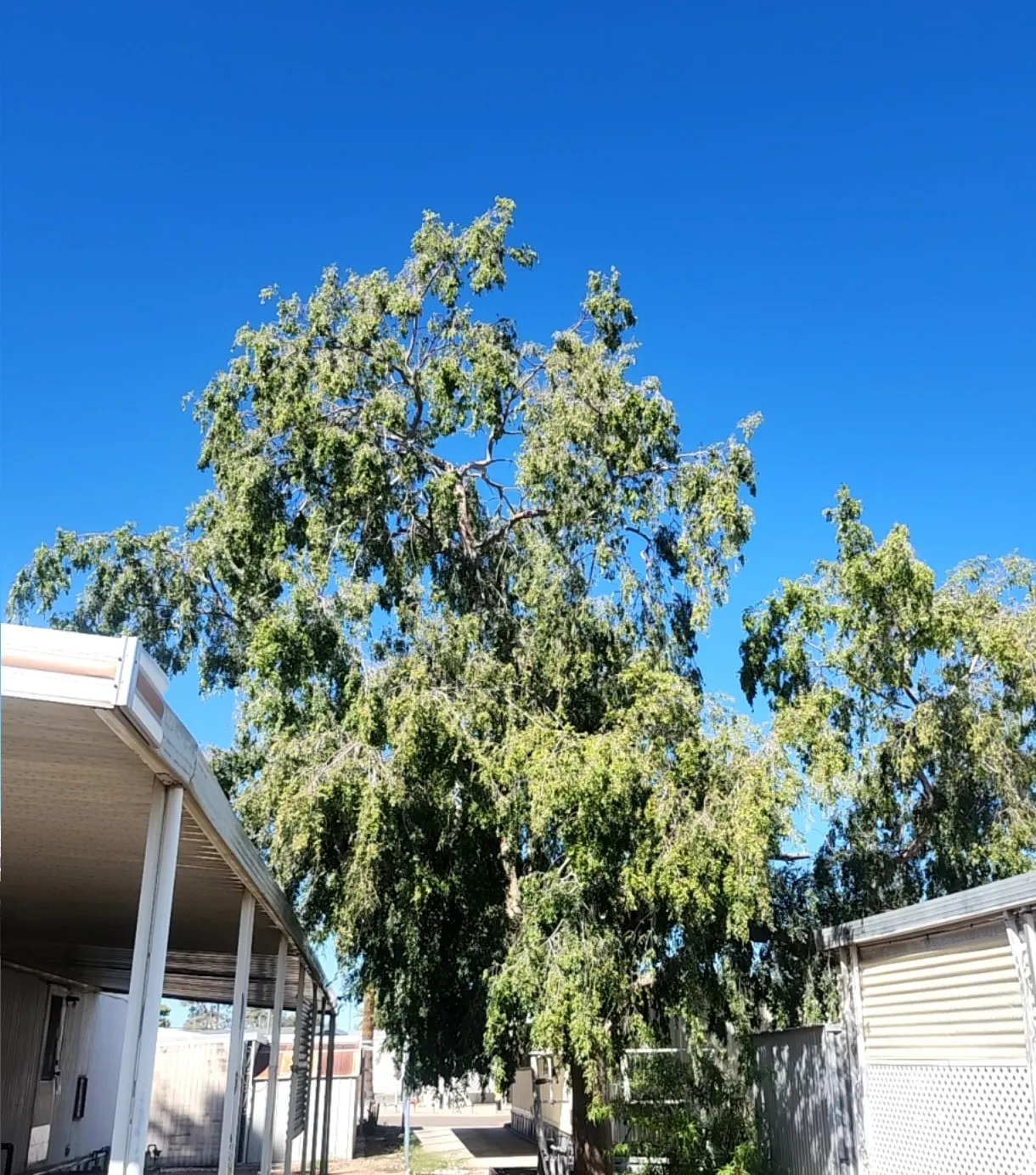
Large shade tree with a heavy, drooping canopy between two homes in Mesa, before trimmingBefore
The same Mesa tree after trimming, with its main limbs showing through a thinned, lifted canopyAfter
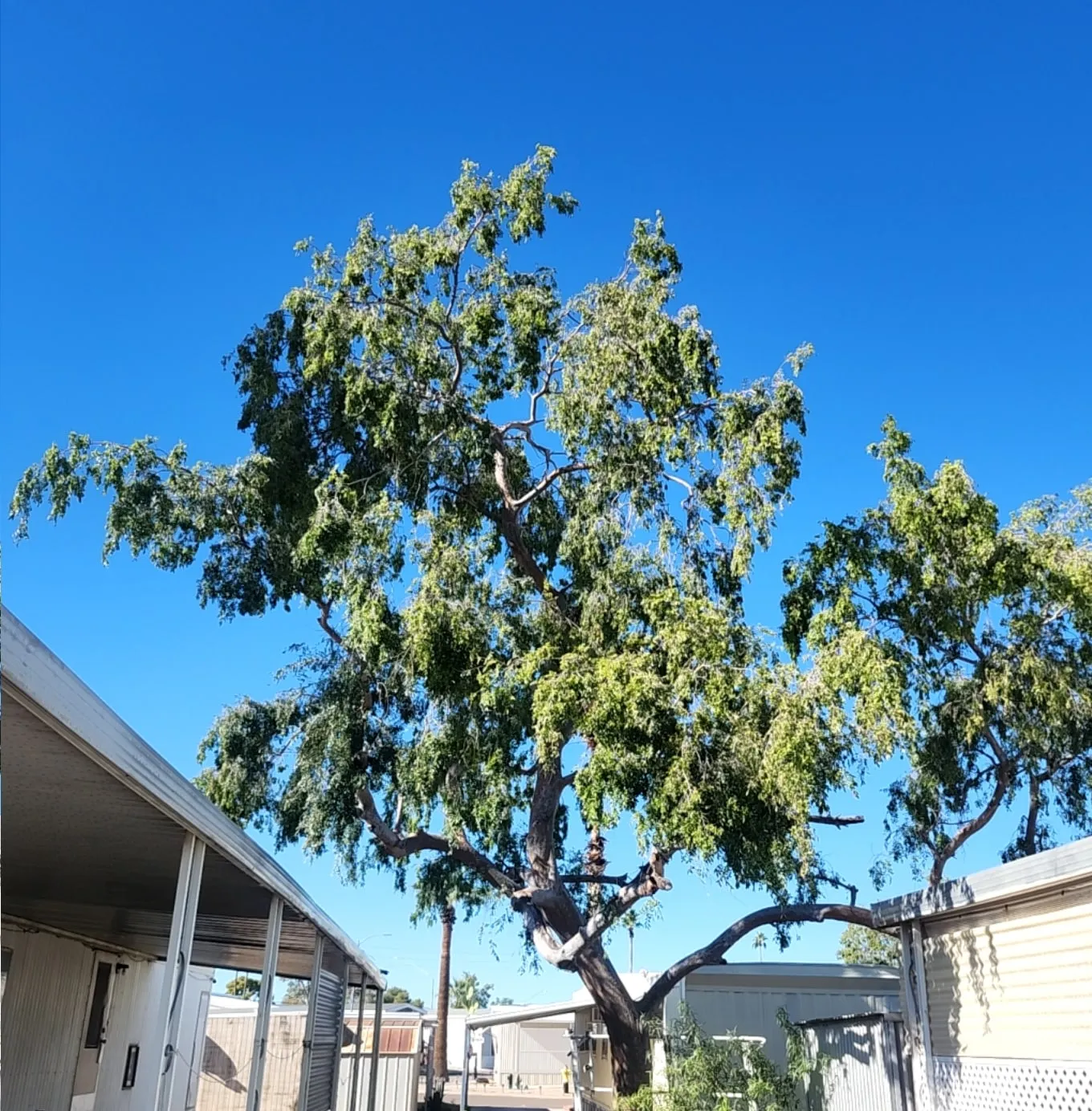
Shade tree between two homesMesa · October 2026The heavy, drooping canopy is thinned and lifted, with the main limbs showing.

Our tree trimming & pruning process

  1. Request a quoteCall 480-779-4349 or use the free estimate form. Tell us your city, what kind of trees you have, and what's bothering you about them.
  2. On-site walk-aroundDale looks at each tree with you, points out deadwood, weak unions and clearance issues, and explains the cuts he recommends.
  3. Written, upfront quoteYou get a clear written price with no hidden fees. Nothing is scheduled until you approve it.
  4. Pruning dayThe crew trims to the agreed plan, lowers heavy limbs with ropes where needed, and protects walls, roofs and landscaping.
  5. Clean-up and haul-awayEvery branch is chipped or hauled off, and the yard is raked clean before we leave.

Tree Trimming & Pruning FAQ

What is the difference between tree trimming and tree pruning?
People use the words interchangeably. Strictly, pruning means selective cuts made for the tree's health and structure, while trimming often refers to shaping or clearance. A good East Valley crew does both: removing deadwood, thinning the crown for monsoon winds, and lifting limbs off roofs and walls.
Can I trim my mesquite tree in summer?
Light trimming such as removing dead or broken branches is fine any time. Avoid heavy thinning or large cuts during the hottest months, because exposed bark can sunburn and the tree is already heat-stressed. The best time for structural mesquite pruning is late winter through spring, ideally before monsoon season starts.
Should I top my tree to make it smaller?
No. Topping, meaning cutting main stems back to stubs, triggers a flush of weakly attached sprouts that grow fast and break easily in storms. It also opens large wounds that decay. If a tree is too big for its space, reduction cuts back to healthy side branches are the right approach, or replacement with a better-sized species.
How much of a tree can be removed in one trim?
As a general guideline, no more than about 25 percent of the live canopy in a single season. Removing more forces the tree to burn stored energy and can trigger heavy sprouting, sunscald and decline. Overgrown trees are often better brought back into shape over two or three visits.
Do you haul away the branches?
Yes. Clean-up and haul-away are included in every AZ Grown Tree Care trimming quote. We remove all cut branches and debris, rake gravel and turf areas, and leave the yard clean. There are no separate disposal fees added after the job.
Do I need HOA approval to trim my tree?
Routine trimming usually doesn't need approval, but some East Valley HOAs have rules about tree height, canopy clearance over sidewalks, or changes to front-yard landscaping. Rules vary by community, so check your CC&Rs or ask your HOA manager before major reductions. Removal more often requires approval than trimming does.
How do I know if my palo verde needs trimming or removal?
Trimming helps a palo verde with deadwood, crowded limbs or low clearance. Large dead sections, a hollow or cracked trunk, oval exit holes near the base, or a sudden lean can point to root borers or structural failure, which may mean removal. An on-site look is the only reliable way to tell.
How long does a typical trimming job take?
Most residential jobs with one to three trees are finished in a few hours, including clean-up. Large or overgrown trees, backyard access through narrow gates, or work over pools can take longer. Your written quote will give you an idea of the time involved before you schedule.

Reviews

Neighbors who trusted us

★★★★★
“Dale and his crew are awesome! I know I can always count on them to do an excellent job at a fair price! They always show up on time, clean up and I couldn’t be happier with the workmanship! Highly recommend!”
Amy S., verified customer
★★★★★
“Dale and his team are great. Quick to schedule, efficient to get the work done, great looking result, fair price. I look forward to continuing to use them for any trimming or tree removal needs.”
Seth B., verified customer
★★★★★
“Dale was able to grind and kill stumps that I was having problems taking care of myself. Very friendly!”
Edgar G., verified customer

Free estimate

Need tree trimming & pruning?

Tell us what you need and Dale will give you an honest, written quote with no pressure and no hidden fees.

480-779-4349

Request your estimate

Takes about 60 seconds. Dale replies within 15 minutes to 24 hours.

What do you need?
Timeline

Prefer to talk? Call or text 480-779-4349

Call DaleFree Estimate