
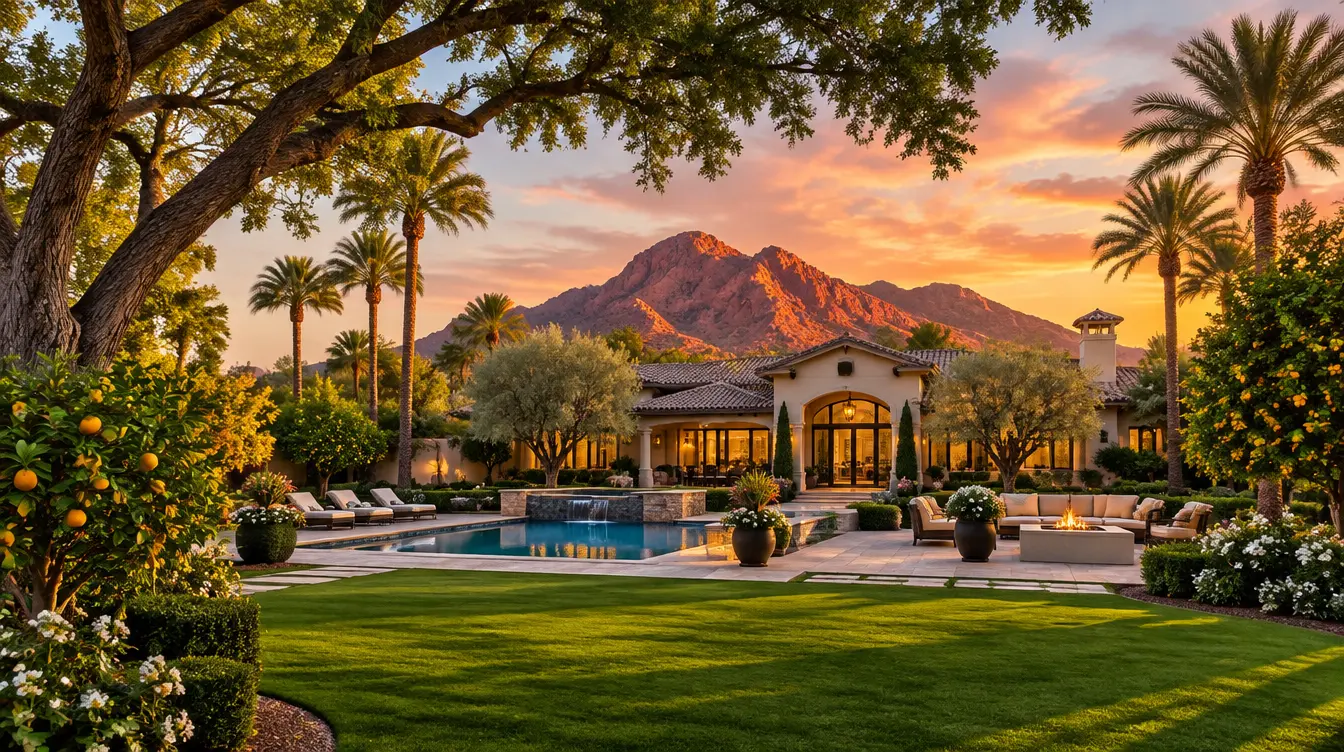
Trees in Paradise Valley: what's different here
Paradise Valley is a residential town of large lots. The Town's General Plan describes it as primarily a one-acre residential community, and most of it is zoned for roughly acre-size homesites. That space allows specimen trees to reach full size: wide mesquite and ironwood, mature olive and citrus groves, tall date palm allées and stands of eucalyptus and pine planted decades ago.
The other defining feature is the mountains. Homes on the slopes of Camelback Mountain and Mummy Mountain fall within the Town's Hillside Development Area, which the Town reviews through its Hillside Development Regulations. On those lots, native desert, boulders, steep driveways and view corridors all shape how tree work is planned and carried out.
Trees we care for most in Paradise Valley
- Palo verde
- Ironwood
- Mesquite
- Citrus
- Olive
- Mexican fan palm
- Date palm
- Eucalyptus
- Aleppo pine
Neighborhoods we serve
- Camelback Mountain hillside
- Mummy Mountain foothills
- Camelback Country Club Estates
- Clearwater Hills
- Finisterre
What tree services does AZ Grown offer in Paradise Valley?
On a Paradise Valley estate, tree care is part of the landscape design, not just maintenance. The goal is healthy, natural-looking trees that frame the home and views.
- Tree trimming and pruning: structural and aesthetic pruning for specimen mesquite, ironwood, palo verde and olive, plus clearance over roofs, courtyards and pools.
- Palm tree trimming: date and fan palms along drives and pool terraces, including seed stalk and fruit removal.
- Tree removal: declining or poorly placed trees, removed in sections to protect stonework, glass and finished landscaping.
- Stump grinding: clean, below-grade grinding ahead of replanting or hardscape work.
- Storm and monsoon cleanup: fallen limbs and uprooted trees after summer storms.
We are glad to coordinate with your landscape contractor, estate manager or designer so tree work fits the overall plan. Request a free estimate or call 480-779-4349.
What should hillside homeowners on Camelback or Mummy Mountain know?
This is general guidance, not legal advice. Hillside rules focus on disturbance, grading and how homes sit on the mountain, and specifics depend on your lot.
Hillside review
The Town's Hillside Development Area covers roughly a fifth of the town, mostly on Camelback and Mummy mountains, and a Hillside Building Committee reviews new hillside construction. Land disturbance and clearing in that area are tied to approved plans and permits. If tree work is part of a remodel or new landscape plan, check what your approvals already cover.
Native plants
Hillside lots often keep native palo verde, ironwood and saguaro. Arizona's Native Plant Law, administered by the Arizona Department of Agriculture, can apply when protected native plants are removed or relocated. Confirm requirements before disturbing them.
Working on steep sites
- Steep, narrow drives can limit equipment, so we plan staging in advance.
- Limbs are lowered by rope to protect boulders, terraces and native areas below.
- Pruning for view corridors is done selectively, never by topping.
We note any special handling on your written quote.
How should large specimen trees on Paradise Valley estates be pruned?
A mature mesquite or ironwood that has had decades to grow on an open lot is a real asset. It shades the house, frames the architecture and is impossible to replace quickly.
Our approach
- Deadwood and hazard limbs first: anything that could drop on a patio, drive or roof.
- Reduction cuts, not topping: long limbs are shortened back to healthy laterals.
- Balanced thinning: enough to reduce wind load, never so much the tree looks stripped.
- Clearance: roof, chimney, pool and walkway clearance that still looks natural.
Species notes
- Ironwood: slow-growing and long-lived; prune sparingly and with purpose.
- Irrigated mesquite: grows dense and top-heavy; benefits from pre-monsoon thinning.
- Olive: regular thinning keeps the canopy open and manageable.
- Eucalyptus and pine: older specimens often need weight reduction over structures.
Our methods follow guidance from the ISA's TreesAreGood.org and the University of Arizona Cooperative Extension. See tree trimming for more.
How do you care for mature citrus and palms in Paradise Valley?
Many Paradise Valley properties have older citrus, sometimes in small groves, along with palms lining drives and pool areas.
Citrus
- Remove dead, broken and crossing wood.
- Cut suckers from below the graft union; they are usually rootstock.
- Keep the skirt fairly low and the canopy full; exposed citrus bark sunburns quickly in Arizona heat.
- Avoid heavy cuts in summer or right before frost.
The University of Arizona Cooperative Extension publishes detailed citrus guides for Maricopa County homeowners.
Palms
- Date palms are often cleaned of old fronds, thorns and fruit stalks for a tidy, uniform look along drives.
- Fan palms collect dead frond skirts that can be a fire and pest concern.
- We leave healthy green fronds in place; over-trimming weakens palms over time.
For allées or groups of palms, we can trim them all in one visit for a consistent appearance. See palm tree trimming.
Can tree work be scheduled discreetly around my household?
Many Paradise Valley homeowners travel, host events or have staff managing the property. We plan around that.
How we keep it low-impact
- Scheduling: pick dates that avoid gatherings, guests or times you prefer to be home alone.
- Single point of contact: we can work directly with your property manager, landscaper or assistant.
- Gate and access: agreed gate procedures, parking spots and staging areas.
- Protecting finishes: boards or mats over delicate hardscape and lawns where equipment must pass.
- Cleanup: raking, blowing and haul-away included, so no debris is left in courtyards, pools or drives.
Seasonal timing
Many trees are best pruned from late winter through spring, which also suits homeowners who are in town during the cooler months. If you are away in summer, pre-monsoon palm and mesquite work can be completed while you travel, with updates sent however you prefer.
For storm damage while you are away, see our emergency tree service page.
How much does tree service cost in Paradise Valley?
Estate properties often involve several trees and palms in one visit, so we itemize each so you can choose priorities.
- Tree count and size: a full property tune-up costs more than a single tree but is more efficient per tree.
- Access: steep hillside drives and long walks from the staging area add labor.
- Protection: lowering limbs over pools, glass and natural stone requires rigging.
- Native plant steps: any required permits or salvage are separate considerations.
Each property is walked in person before the itemized quote is written.
Your price is set after Dale walks the property, and it comes in writing with no hidden fees. See the tree service cost guide or request a free estimate.
Our services in Paradise Valley
- Tree Trimming & Pruning in Paradise Valley: Structural pruning, crown thinning and clearance cuts for mesquite, palo verde, ironwood and more.
- Tree Removal in Paradise Valley: Safe, controlled removal of dead, leaning or problem trees, even in tight backyards beside walls and pools.
- Palm Tree Trimming in Paradise Valley: Frond trimming, seed-pod removal and clean-up of loose leaf bases for date palms, Mexican fan palms and more.
- Stump Grinding in Paradise Valley: Grind stumps below grade so you can replant, lay gravel or pour hardscape. Grindings cleaned up.
- Monsoon & Storm Tree Cleanup in Paradise Valley: Fallen trees, split limbs and storm debris cleared safely after monsoon microbursts and dust storms.
- HOA & Commercial Tree Care in Paradise Valley: Scheduled pruning, palm trimming and removals for HOA common areas, streetscapes and commercial sites.
- Sissoo Tree Removal in Paradise Valley: Removal of sissoo trees whose surface roots are lifting pavers, cracking pool decks and invading pipes.